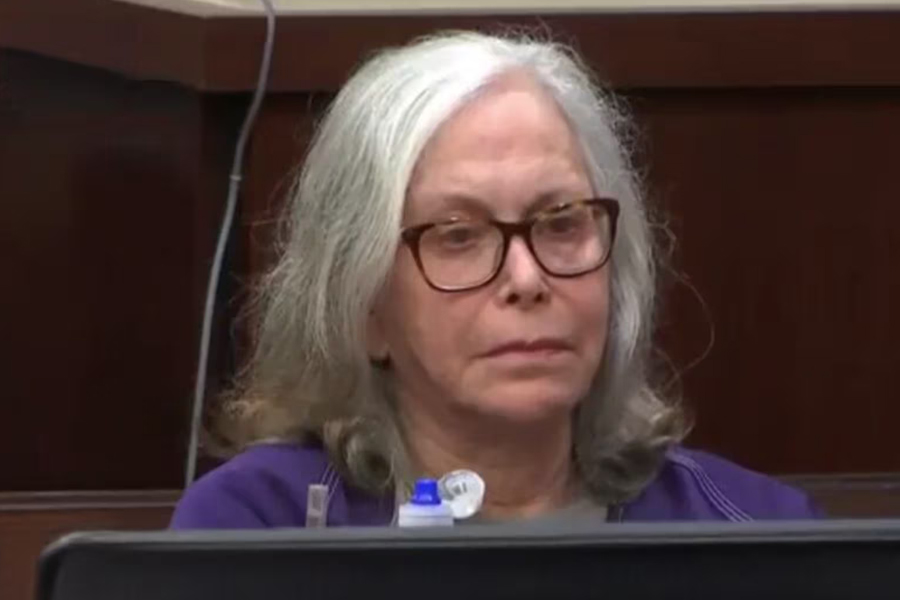
A Portrait Disturbed
I watched a life that had been stitched together by routine and small domestic triumphs slowly come apart on a public stage. Donna Sue Adelson was not the kind of figure who sought headlines. For decades she lived in the soft margins of family business and household logistics, a bookkeeper and organizer who preferred ledgers and lunchboxes to limelight. Yet when the legal machinery spun around the 2014 killing of Dan Markel, her name moved from the margins into the bright, unforgiving spotlight. The transition was abrupt, and in many ways it exposed how a lifetime of private choices and alliances can suddenly be read as evidence.
The Sentencing That Changed Everything
When the judge announced the sentence, I felt a physical jolt reading the words. Life in prison was imposed on the murder count, with additional consecutive terms tacked on for related offenses. The courtroom reacted like a room that had been filled with too much air and then slowly let it out. What struck me most was not only the severity of the punishment, but the tenor of the judge’s remarks. The judge criticized Donna Sue Adelson for her demeanor and what the court described as an absence of sincere remorse. Those words carried weight; they shifted public perception from a defensive elder to someone judged morally culpable in a way that could not be easily undone.
The sentencing was not merely a legal moment. It felt ritualistic. It was the final paragraph typed into a long document of accusation. For months the trial had been a forensic examination of family ties, finances, and coded conversations. The sentence made those pieces permanent, at least in the trial court. I could sense the permanence like a stamp hitting wet ink.
Family Tangles and Testimony
Families often resemble complex knotwork. Pull one thread, and another tightens. In this case, threads were pulled in open court. Testimony from family members, notably Wendi and Robert Adelson, painted a picture of pressure, disagreement, and obsession. Their voices, deployed on the witness stand, transformed private grievances into courtroom narrative. I found the images of siblings and parents facing one another under oath to be unsettling. There is a special cruelty when family stories become evidence.
Witness testimony did more than outline motive. It revealed texture. Small details about custody fights, repeated conversations about moving children, and financial discussions were pieced together. Those shards, once scattered through texts and calls, aggregated into a portrait prosecutors used to show pattern and intent. Through those exchanges, the slogan “family first” cracked and revealed something harder at the center.
Money, Motive, and What Remains Unsettled
Money is both motive and mirror. The family accounts once contained millions. That fiscal narrative provided context for behavior; it also showed the potential influence money could exert over decisions. Yet after the criminal cases concluded, the public accounting of assets remained surprisingly static. There were no major reported forfeitures that would dramatically alter the family’s visible wealth. That absence felt like a gap in the story. If money fueled elements of the plot, its trail ended in public records with a few question marks.
I often think of money as a river. Here the river was traced to certain tributaries and then the maps stopped. Why did the public trail not show more? Did assets move in ways that left little trace? Or did legal protections and private ownership simply shelter many parts of the family’s wealth? Those are puzzles that remain in the background of a case otherwise defined by faces and testimony.
The Legal Aftermath and the Road Ahead
After conviction comes the appellate corridor, lined with filings and legal maneuvering. The defense filed a notice of appeal, signaling an intent to challenge evidentiary rulings and other issues. I see that appeal as a second act, procedural and technical, but meaningful. It will not erase the images from the trial. It may, however, reopen debates about how the evidence was weighed and whether certain procedural decisions were appropriate.
The trial court also denied several post-trial motions that sought relief based on claims of juror irregularities and newly alleged procedural missteps. Reading those denials, I felt the hard surface of judicial finality. For the moment, the trial court has stood behind the verdict. But appellate processes can be slow and precise, like surgical instruments rather than sledgehammers. They can alter the shape of a case incrementally, not because the facts change, but because legal standards are applied differently.
Public Reaction and the Echoes of Media
The case produced a torrent of public reaction. Clips of the verdict circulated rapidly, and commentary multiplied across podcasts and social channels. I noticed how narratives forked: some saw Donna Sue Adelson as a calculating matriarch; others framed her as a tragic figure consumed by family loyalty. Media consumption in this case functioned as a hall of mirrors. People saw the parts of the story they wanted to see and ignored others.
I find social media to be an echo chamber and then some. It amplifies and distorts. It also creates pressure points that can influence peripheral actors, such as friends and distant relatives, who suddenly feel the heat of public curiosity. What matters in court is proof. What matters in the court of public opinion is resonance. Here, resonance was abundant.
What Still Feels Unresolved
Even with a verdict and sentence, many questions linger, some mundane and some existential. Will appellate filings unearth new facts? Will civil litigation materialize as a next chapter? Are there still financial threads that have not been pulled? The story of Donna Sue Adelson is not a closed book because legal closure does not always mean narrative closure.
I keep returning to the human elements. The grandchildren, the siblings, the decades of ordinary life now reframed by violence and legal consequence. The story reads like a weather map that suddenly turned from calm to storm. Lives were forever rearranged. The public record may document convictions, but it will not catalogue small, private moments of regret or tenderness. Those remain, inaccessible, and at times the most haunting.
FAQ
Who is Donna Sue Adelson?
Donna Sue Adelson is a longtime South Florida resident who managed books and household affairs for her family. In recent years she became a central figure in a high-profile criminal case tied to the killing of her former son-in-law. Her public life shifted dramatically from private domestic management to the glare of criminal charges and conviction.
Why was she convicted?
The court found that communications, financial transactions, and witness testimony established a pattern linking her to a plot connected to the fatal shooting. The prosecution presented those elements to demonstrate motive and orchestration. The jury returned guilty verdicts on counts including murder, conspiracy, and solicitation.
What happened at sentencing?
At sentencing the court imposed life in prison for the murder conviction and added consecutive terms for related charges. The judge criticized her demeanor and referenced what the court viewed as a lack of appropriate remorse. The sentence reflected both the gravity of the offense and the court’s judgment about responsibility.
Has an appeal been filed?
Yes, the defense filed a notice of appeal and intends to challenge aspects of the trial, including evidentiary rulings and other procedural matters. The appellate process can be lengthy and technical, and it will be the next legal arena where the case is contested.
What about Wendi and other family members?
Wendi and other family members testified during the trial. Wendi has not been criminally charged in relation to the killing. Other relatives have faced public scrutiny and, in at least one case, conviction. Family relationships have been deeply fractured and remain a central theme in public discussion of the case.
Did the Adelson family lose significant wealth after the convictions?
Public accounting and reporting have not shown dramatic asset forfeitures that would radically change the visible picture of family wealth. Estimates of personal net worth for Donna Sue Adelson remained roughly similar to prior approximations. Some financial details remain private, and the full story of asset movement may not be reflected in public records.