The Problem with Being Remembered Only Through Someone Else
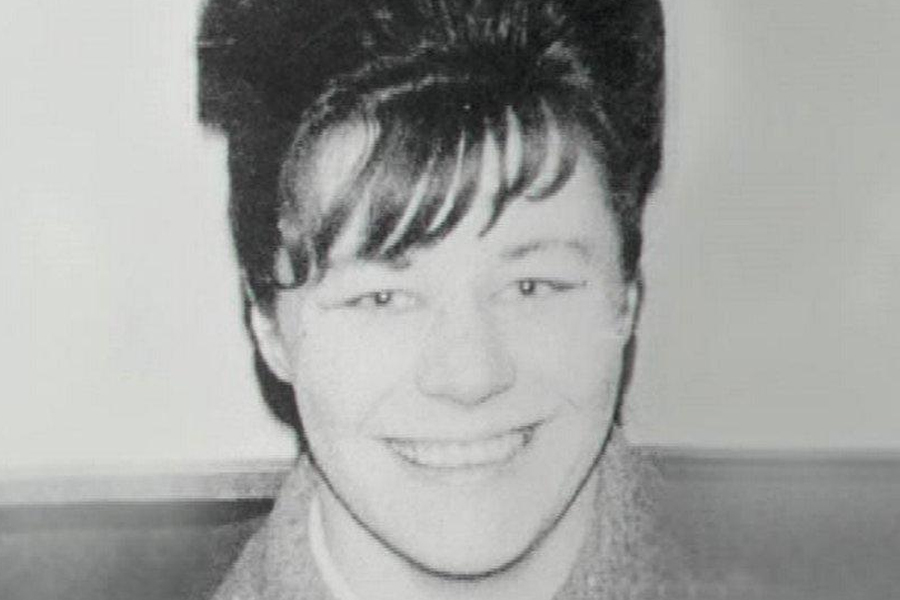
I keep returning to the strange fact that some lives become visible only after they have already been overwhelmed by a darker story. Rena Costello is one of those people. Her name appears most often in the shadow cast by Fred West, yet that shadow should not be mistaken for the whole outline of her life. I see her as a woman whose identity was folded, flattened, and then almost swallowed by the scale of the West family tragedy. That is not the same thing as absence. It is a different kind of presence, one made of silence, fragments, and the effort required to reconstruct a person from damaged records.
What draws me in is not only the notoriety surrounding her family but the human pressure points inside the record. A birth in Scotland. A move south. A marriage. Children. Separation. Disappearance. Each step sounds ordinary until I hold it up to the jagged history that followed. Then even the most domestic details begin to look like cracked glass catching light. Rena Costello was not a symbol. She was a person living inside a life that the public later turned into a case study.
Scotland as a Starting Point, Not a Footnote
The Scottish beginning matters more than it is usually given credit for. Coatbridge is not just a place marker on a timeline. It gives Rena Costello a starting texture, a social world, a local rhythm, and a history that existed before the West name ever entered the picture. I think that matters because stories like hers are often treated as if they begin at marriage, or at the first police file, or at the first time the public notices them. But people do not begin where the headlines begin.
A life starts in ordinary rooms. In family habits. In weather. In accents. In work and school and small dependencies that never make it into a criminal archive. I imagine Rena Costello first as someone shaped by a place that had its own demands and limits, long before she became attached to one of Britain’s most infamous family names. That earlier life is hard to recover, but its absence is instructive. It tells me how quickly women of her generation could vanish from the written record once they crossed into marriage and motherhood.
That disappearance from record is not the same as insignificance. Sometimes it is the opposite. The less a woman was allowed to keep for herself, the more thoroughly her life could be rearranged by others. Rena Costello seems to have lived close to that edge.
Marriage, Mobility, and the Illusion of a Fresh Start
When Fred West entered her life, the story gained momentum. Young marriages can look like doors opening. They can also become narrow passages. In Rena Costello’s case, the marriage appears to have offered movement, but not safety. Movement is not freedom when every turn leads to instability. A family can travel and still be trapped.
I read the West household as a place where routine never quite settled. That is important, because instability is often the first visible sign of deeper harm. Not every unstable marriage becomes notorious, of course, but it creates the conditions where fear grows quietly. Uncertainty can wear a person down the way water wears stone. It does not need to strike dramatically to do damage.
Rena Costello’s life with Fred West should not be reduced to a single label like wife or victim, even though those labels are part of the record. I think of her instead as a woman trying to hold a domestic structure together while the ground beneath it shifted. The marriage produced children, but it also produced strain, compromise, and the slow narrowing of options. That narrowing is one of the saddest parts of her story. It suggests a life increasingly lived inside other people’s decisions.
The Children and the Weight of Parenthood
Charmaine and Anne Marie are central not because they define their mother in a simple way, but because they reveal the stakes of the household. Motherhood in this story is not sentimental. It is urgent. It is practical. It is dangerous. Rena Costello’s identity becomes inseparable from her daughters because the family record itself becomes a record of vulnerability.
Charmaine’s disappearance remains one of the most haunting elements in the wider family history. A child missing from a family tree leaves a hole that does not close. It only gets colder around the edges. Anne Marie, by contrast, stands as a surviving thread, the one person whose life stretches forward far enough to make the family history speak in a living voice. I find that contrast devastating. One daughter becomes absence. The other becomes testimony.
That split gives Rena Costello a complicated afterlife in memory. She is not remembered through ordinary family happiness, because that is not what survived. She is remembered through loss, survival, and the fact that one daughter’s life was cut off while another’s continued long enough to describe what had been hidden. In that sense, the children do not merely sit beside her story. They are part of the mechanism by which her story still exists at all.
The West Family as a House Built on Fault Lines
I have come to think of the West family less as a traditional family tree and more as a structure built over a fault line. The branches look normal from a distance. Up close, the damage is everywhere. There are marriages, children, separations, relocations, new partners, and then the deeper horror that makes the entire structure look unreal in hindsight.
Rena Costello’s place in that family matters because she belongs to the period before the public fully understood the scale of what the West name would come to represent. She is part of the prehistory of the case, the earlier layer where warning signs were still private and the future had not yet been forced into the open. That makes her story essential. Without her, the early family narrative loses one of its key human anchors.
I also think the family should be understood as broader than the most famous children alone. There were other children, other relationships, and other women pulled into the orbit of the West household. That wider circle matters because it shows the system around Rena Costello was not a single bad event. It was a network of repeating instability. One relationship after another. One household arrangement after another. A web tight enough to trap people and thin enough to break them.
Silence as a Historical Force
What fascinates me most is silence. Not silence as peace, but silence as a historical force. Rena Costello’s life is hard to reconstruct because so much of it was not preserved. That missing material shapes how she is remembered. In public memory, she is often seen only where another story touches her. That is how women get written out of history while still being central to it.
I do not read that silence as emptiness. I read it as a sign of how little space there was for her independent existence to survive in the record. A woman’s life can be crowded out by family identity, and later by criminal infamy, until there is almost no room left for the person herself. Rena Costello’s story resists that process. Even in fragments, she remains visible. Even in partial form, she still insists on being seen.
That is why I think writing about her requires care. The temptation is to make her only a prelude to the more famous crimes. I refuse that. She is not a corridor leading to another room. She is a life shaped by her own losses, pressures, and unfinished possibilities. The tragedy attached to her name should not blind us to the fact that she once lived a full human existence outside the frame of notoriety.
What the Record Suggests About Survival
I am struck by the possibility that surviving within such a household was itself a form of endurance that left few traces. Survival is not always visible. Sometimes it looks like silence, withdrawal, compromise, or a series of choices made under pressure. When people ask why someone stayed, or why a pattern continued, they often ask from the comfort of hindsight. But hindsight is a luxury. Living through danger is not.
Rena Costello’s story suggests a life shaped by constraints that were social, domestic, and emotional all at once. The record may not preserve every detail, but the shape of the life is still legible. A young woman leaves Scotland. A marriage forms. Children arrive. Instability grows. One daughter disappears. Another survives. The mother fades from public view, then reappears only through later investigation and remembrance.
That sequence is not just tragic. It is revealing. It shows how family history can become a trapdoor through which a whole person falls out of sight.
FAQ
Who was Rena Costello?
Rena Costello was the first wife of Fred West and the mother of Charmaine and Anne Marie. She is also known in public records as Catherine Bernadette West, née Costello.
Why does Rena Costello still attract attention?
She attracts attention because her life sits at the center of the early West family history. Her story connects marriage, motherhood, disappearance, and the wider public fascination with one of Britain’s most notorious criminal families.
What makes her story different from a typical true crime profile?
I think the difference is that Rena Costello is not primarily remembered for what she did, but for what was done around her life. Her identity survives in fragments, which makes the historical reconstruction both difficult and deeply human.
How do Charmaine and Anne Marie change the way her story is understood?
They turn her from a single biographical figure into a mother whose life was bound to the fate of her children. Charmaine deepens the mystery, while Anne Marie preserves memory. Together, they keep Rena Costello from being reduced to a name in a file.
Is Rena Costello only important because of Fred West?
No. That would make her sound like an accessory to someone else’s history. She matters because her life reveals the earlier domestic and emotional landscape from which the later horror emerged. She belongs to the story in her own right.
Why is there so little reliable public information about her?
Because women in ordinary domestic life were often underdocumented, and because later notoriety can overwrite earlier identity. In Rena Costello’s case, the public record seems to preserve the catastrophe better than the person.
Choosing The Right Stay For The Way You Travel
Building A Va Disability Claim That Survives A Close Review
How To Choose A Roof That Thrives By The Ocean